
OOKYSPOOKYGORYALIDOCIOUS: A GOTHIC PROJECT ON PROJECTS, THE GHETTO, AND BLACKNESS AS A HORROR STORY
The south, the ghetto, the hoochies and the homies and the haunted, got something to say. You ready to hear it?

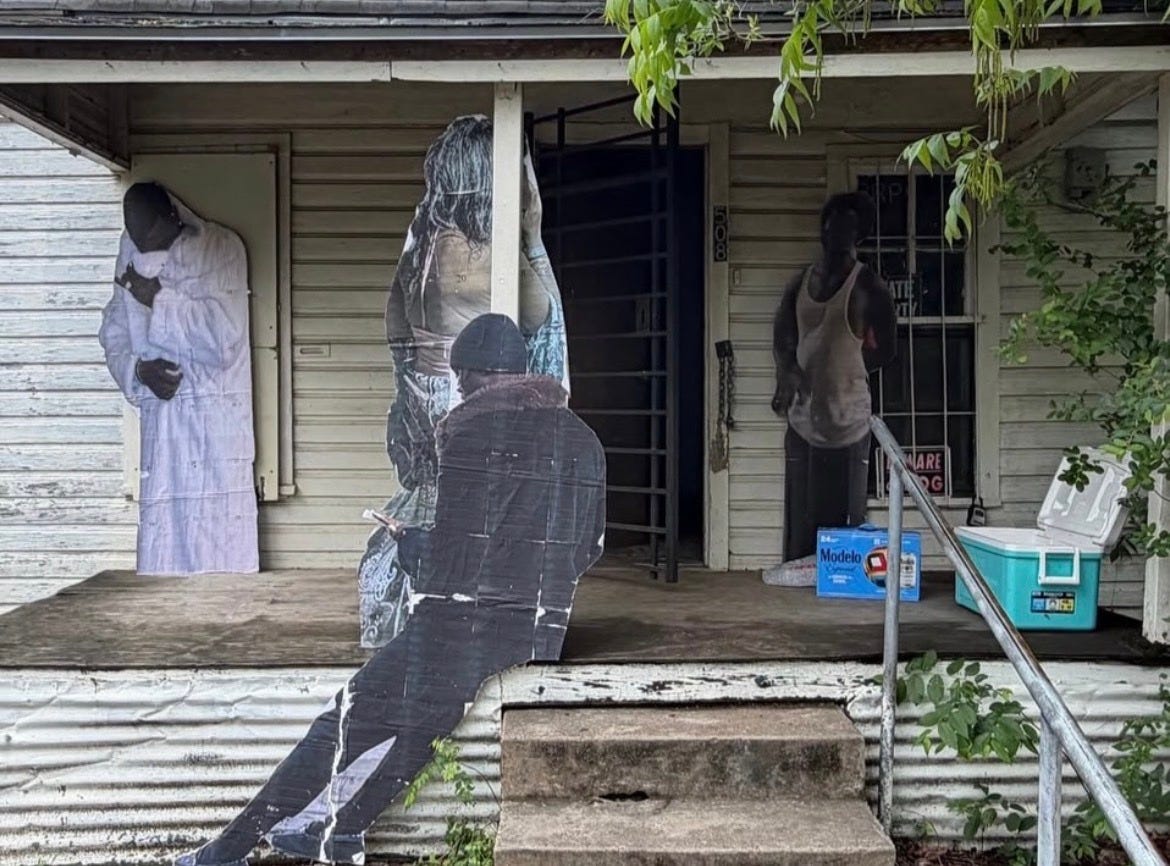
I’d like us to take a second and think about the ghetto. I imagine to outsiders looking in—the pearl-clutching suburbanites, the scandalized Black middle- and upper-class, the voyeuristic academics, the scared-excited gentrifiers sneering even as they elbow their ways into low-income neighborhoods—the ‘hood is a nothing-space. Not interesting enough to be liminal, and anyways, the stairwells, hallways and train stations of the ghetto are too dirty, too frightening to speak of. For these outsiders, the hood is a nothing-space, a grave, a hell where the lowest of lowlifes accumulate. Even the most well-meaning and liberal minded lookers-on can’t help but turn up their noses at what is deemed society’s junk drawer. There is where the bad people live—the dealers and junkies, crackheads and -whores, gangbangers, murderers, thieves and rapists. It is where the “wrong sort” of Black person stays; the belligerent and loud, men in sagging pants and women with exposed skin, the amoral and immoral, neglectful welfare mothers and absent fathers, “fast” little girls and little boys impatiently biding their time to become, as Hilary Clinton once described, super-predators.
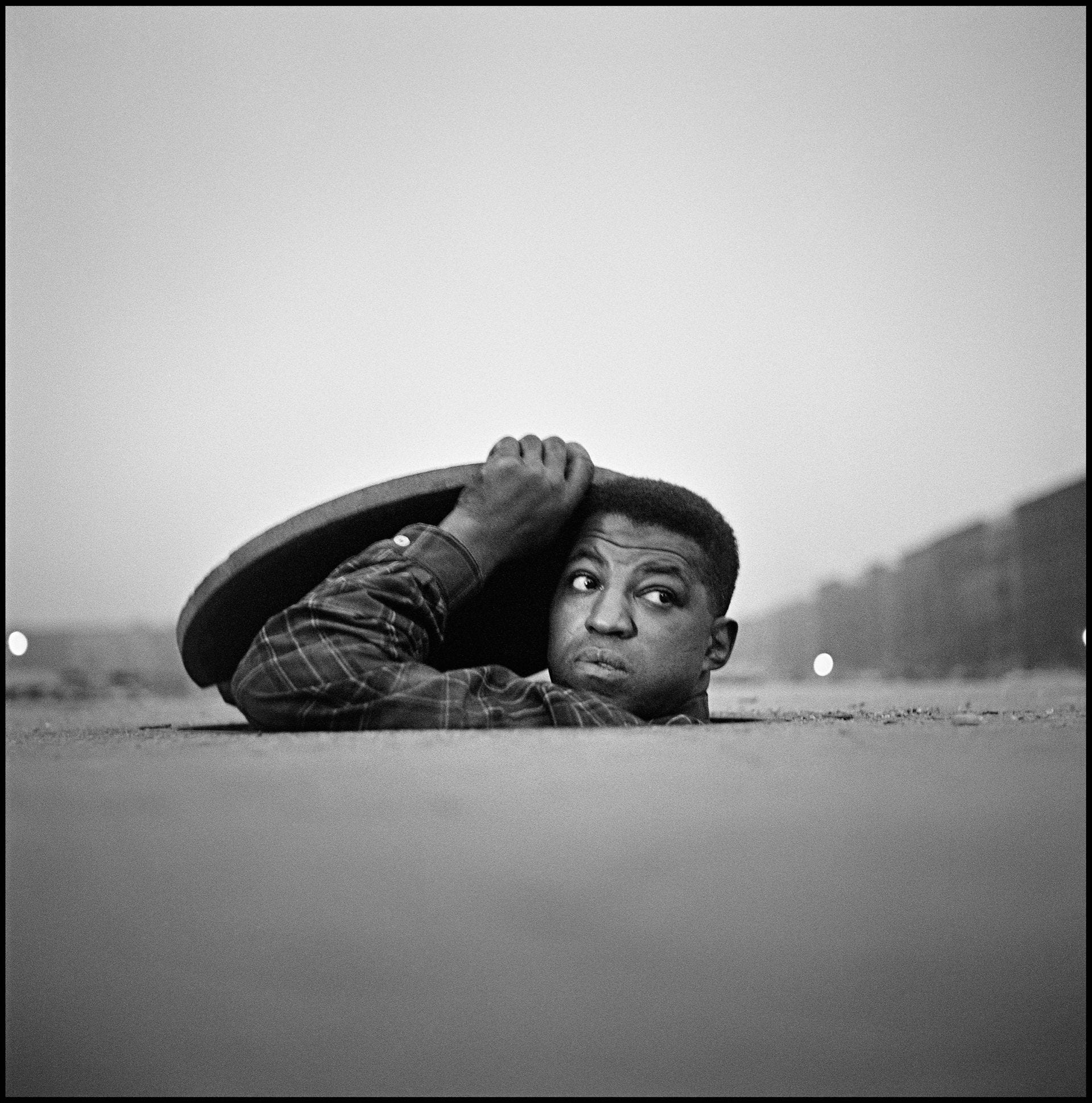
A dirty place for dirty people. This is what society knows, what whiteness knows—what you, dear reader, know.
But I know another thing. For the whole of my life I’ve been poor and have lived in or around ‘hoods, ghettos, and slums. Gunfire is a familiar sound to me, but so are firecrackers, soul music and RnB. I’ve seen sweet ice tea sunrises over the roofs of ruined projects, and graffiti to rival the Sistine Chapel, dandelions and daffodils pushing up through concrete. For me and so many others, the ‘hood is a locus of survival, resistance, one of the last bastions of Blackness, authentic and unfiltered through respectability politics. It is complex, varied, as multifaceted as the diamond studs gracing the ear of a young Black boy. From Bankhead to Oakland, to each and every MLK road, drive or boulevard, to the tallest of projects to the squattest of duplexes—it is home, it is culture, and it is bubbling with Gothic aesthetic, sensibility, and mood.
Often we equate southern gothic aesthetics with whiteness—white fears over freed enslaved people, down-on-their-luck cotton kings, crumbling plantations and the swamps that surround them. And while there is much to ponder about the south’s ugly-nasty history, the gallons of Black blood used to water the very same trees they string us from, I want to look at our more recent history, our present. Consider with me, the hood: the apartment complexes forgotten by the government, run by slumlords, decaying even as they house countless souls; the madmen and unhinged women that wander the streets, thrust into houselessness by the defunding of mental health care, or by drug addiction; consider the historic houses, dilapidated and abandoned, the trap houses and ‘crack dens’, the streets howling with ghosts both figurative and literal. See here, the neighbors telling ghost stories of little boys and girls being snatched up by who-knows-who, never to be seen again. Somebody’s cousin is acting possessed—too much crack, too much fent, too many pills to dull the pain of losing somebody dear to sickness, violence. The streets in this particular neighborhood are poisoned; bad air or haints, or maybe it’s the chemical plant down the road, the data center burping out hot toxins to sicken the children, weaken the elderly. Oh, we don’t go into those houses there—ain’t you hear? After Katrina, they left so many dead in attics, drowned or knocked flat from heat, it’s a wonder the city don’t rear up and scream.
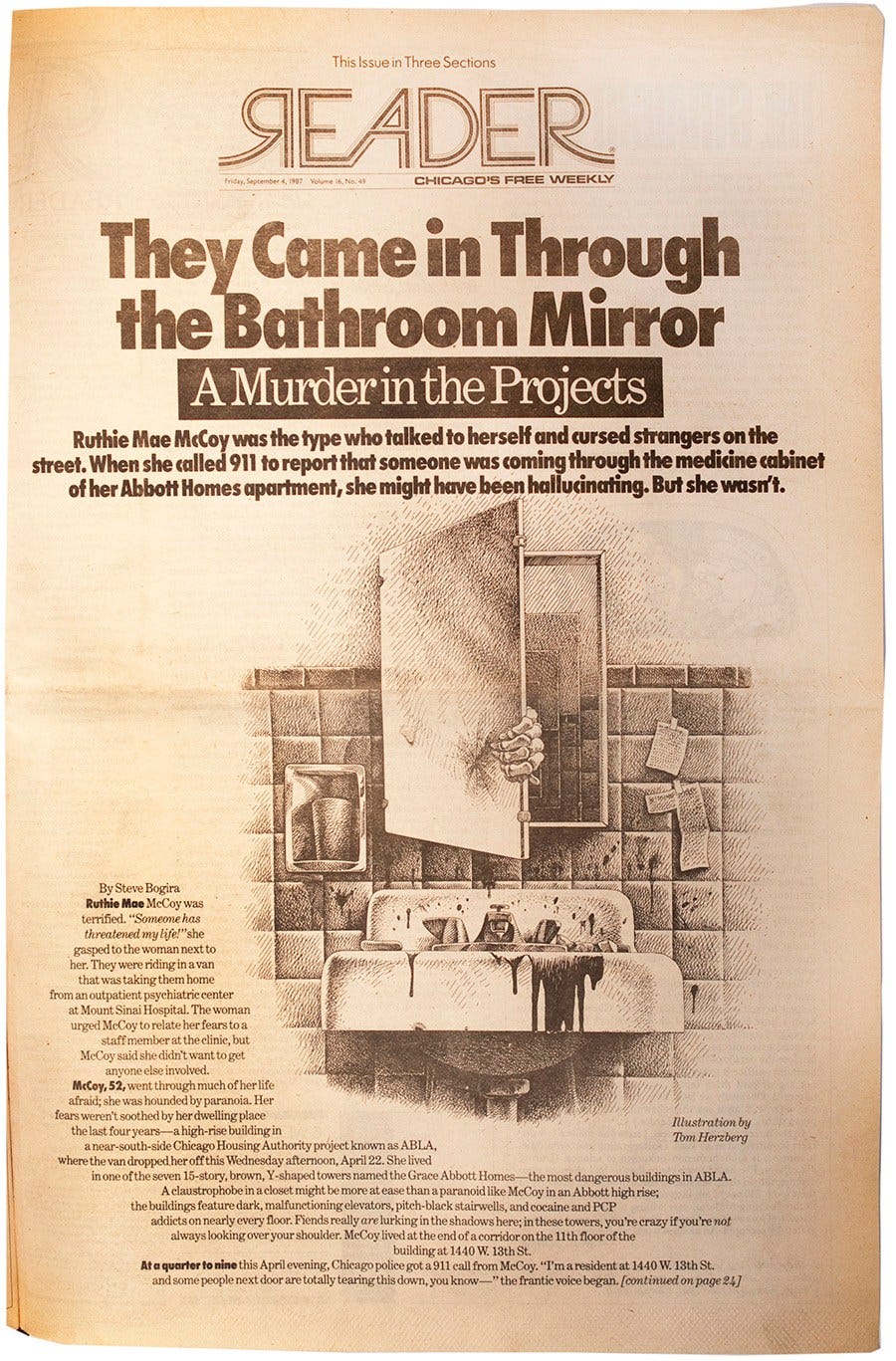
They Came in Through the Bathroom Mirror
Bloody and hainted, the ‘hood can’t help but be gothic, a fact that’s heightened by the Black american predisposition towards death. We all die, yes, but to be Black and american is to die daily, hourly, by the minute. We sing death, we rap it; we pour libations to the dead, we keep obituaries and funeral flowers like mementos. Remember when we survived this? Remember how this and that broke us? She look so good in her casket, don’t she? Shrines on the side of the road, shoes thrown over powerlines to commemorate this or that homie. We say ‘rest in power’ now, instead of ‘rest in peace’, hoping, maybe, that the afterlife will give some measure of glory that living never could.
But why this project, and why now? I’ve been grappling with Frank B. Wilderson III’s theories on afropessimism, the idea that to be Black is to be permanently regulated to a status of non-person. In his view, to be Black is to be enslaved, and to be enslaved is to be dead, thus meaning that when you’re Black you are a nothing, an absence, an object. I used to think this was grim thinking—what happened to faith, to hope and joy, to perseverance and love of the skin? What about Martin Luther King Jr’s dream? Mandela’s? What happened to the hopes of Fred Hampton and Angela Davis, Assata Shakur and Marcus Garvey? My hope’s run thin these days, and though I believe that we as Black people are capable of making forward strides, of improving conditions for ourselves and our descendants, I wanted to take a moment to express despair. There is some benefit to wallowing in it, you know. Same as coughing loosens the phlegm in the throat, same as complaining relieves the heart of its burdens, so too does sitting with grim reality.
Reality is thus: the Black body is not a loved body, and in america, we need only glance at our phones to see what latest act of depravity that’s been done against us. Sometimes, we needn’t even look at our phones, only peek outside for a moment, see what’s being done in our neighborhoods, our cities and our ghettos. Those who do not study history are doomed to repeat it, and I believe that those who cannot see this weary world for what it is are powerless to change it. To speak a truth is not the same as saying, “This will always be so,” but is instead looking head-on, unflinching at the mountains we must climb.
So what am I trying to do with this ookyspookygoryalidocious project? Bum us out? Harsh the vibe? No, never. I am too proud and too in love with my Blackness and the Blackness of others to thrust any of us into hopelessness. What I want is to explore the southern gothic aesthetic through the lens of the ‘undesirable’ sort of Black person, through the ghettos and so-called ‘slums’. I want to imagine realities where the lowest and most marginalized of us are centered, where we are not villains, thugs or thieves and welfare queens, but full and complex human beings, deserving of consideration. I want to remind us, through the spectacle of horror and gore and hauntings, this simple truth: We need not be wealthy or polished to matter. We need not be perfect to count. We can be, and we are, mad and loud and angry and afraid and reactive and foolish and plagued by the ghosts of our past. We are gothic, we are varied.
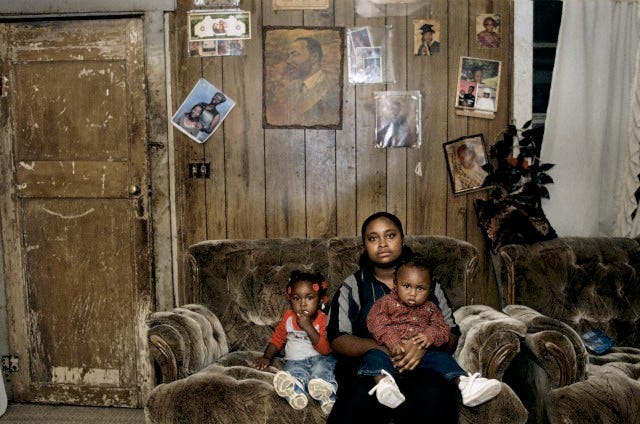
In terms of mood and aesthetics, I’m looking to Gordon Parks, the photographs from the Black Archives on instagram, the work of Deana Lawson, as well as Candyman (the original, as well as the 2021 version). Also, Memphis rap, horror rap x trap horror, and the music of artists like Rico Nasty, Monaleo, and bbymutha.
i've long been haunted by this book https://archive.org/details/inextremisdeathl0000unse